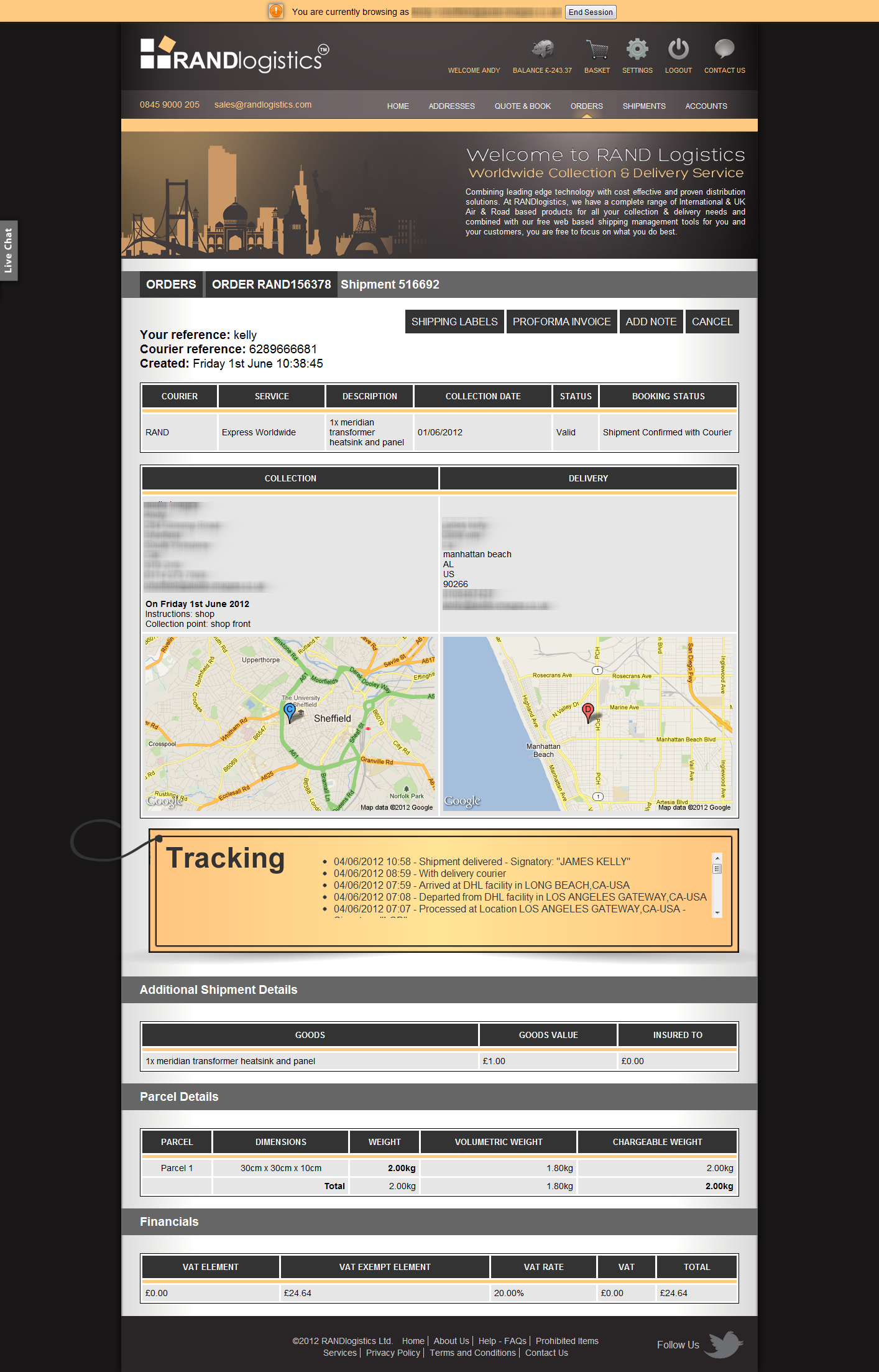
A business-critical quote-to-ship
platform supported by Chris since 2011, with ongoing modernisation spanning carrier integrations,
customer operations, auditability and production reliability.
Since 2011
Long-term technical supplier
FedEx REST
SOAP/WSDL migration completed
RANDQR
Persisted quote-response audit IDs
PHP 8.4
Modernised application stack
MySQL 8
Infrastructure upgrades
The challenge
RAND's platform has accumulated years of genuine
logistics business rules: tariffs, surcharges, carrier constraints, customer-specific pricing,
booking workflows and operational exceptions. Modernisation therefore has to preserve working
commercial behaviour while replacing ageing integration technology.
Modernise carrier integrations without destabilising live quote-to-ship operations
Keep established RAND pricing rules authoritative during carrier API changes
Improve traceability when quotes combine local pricing with live carrier capability data
Give operations and engineering better diagnostics for production carrier behaviour
2026 modernisation
The latest programme replaced RAND's active legacy
FedEx SOAP/WSDL integration with a plugin-owned REST implementation while deliberately preserving
the wider platform's established commercial and operational behaviour.
OAuth-backed FedEx REST clients for rates, shipment creation, tracking, pickups, document
upload and cancellation
Live FedEx rate/capability comparison retained as diagnostic evidence while RAND's local
tariff model remains the pricing authority
Dedicated FedEx admin tooling for live quote comparison and operational diagnostics
Persisted quote-response history with RANDQR audit identifiers, result summaries and
rendered quote evidence
Removal of the active legacy FedEx SOAP layer and WSDL assets after cutover
Outcome and capability demonstrated
RAND now has a current FedEx integration boundary
covering the operational shipment lifecycle, stronger diagnostics around live carrier behaviour and
a clearer audit trail for generated quote responses.
More importantly, the work demonstrates the value of
long-term production stewardship: modernising a mature logistics platform incrementally, preserving
business rules during carrier change and leaving the application easier to support after each
migration rather than simply swapping one endpoint for another.